

Background

Enforcement of Intellectual Property Rights

A key objective of the National IPR Policy is to enhance the enforcement and adjudication of Intellectual Property Rights (IPRs). The policy highlights the importance of building capacity across enforcement agencies, including the reinforcement of IPR cells within state police departments.

In addition, the policy advocates for resolving IP disputes through specialized commercial courts and promotes the use of Alternative Dispute Resolution (ADR) mechanisms. By bolstering mediation and conciliation centres, the aim is to encourage faster, more efficient resolution of IP-related cases.

What We Do

In order to strengthen the enforcement mechanism in the country CIPAM endeavours to work on the following activities:
CIPAM’s Initiatives to Strengthen IPR Enforcement in India

To reinforce the IPR enforcement framework across the country, the Cell for IPR Promotion and Management (CIPAM) is actively engaged in a range of strategic initiatives, including:

  • Capacity building for key enforcement bodies such as the police, judiciary, and customs authorities.

  • Implementing measures to combat counterfeiting and piracy across sectors.

  • Organizing regular IP colloquia for members of the judiciary to support more effective adjudication of IP-related cases.
  • Facilitating the adjudication of IP disputes through specialized commercial courts.

  • Promoting Alternative Dispute Resolution (ADR) methods for quicker and more amicable resolution of IP conflicts.
  • Conducting fact-finding exercises to evaluate the scale and impact of counterfeiting and piracy.

  • Encouraging the use of technology-driven solutions to enhance the enforcement of IPRs.

  • Enhancing Inter-Agency coordination for effective IPR enforcement ,efforts are also focused on improving coordination among various enforcement agencies by providing strategic direction and guidance to strengthen overall enforcement mechanisms.

These efforts aim to build a more secure and responsive IP enforcement ecosystem in India, fostering innovation and protecting creators’ rights.

Background
Background

CIPAM’s IPR Enforcement Toolkit for Police

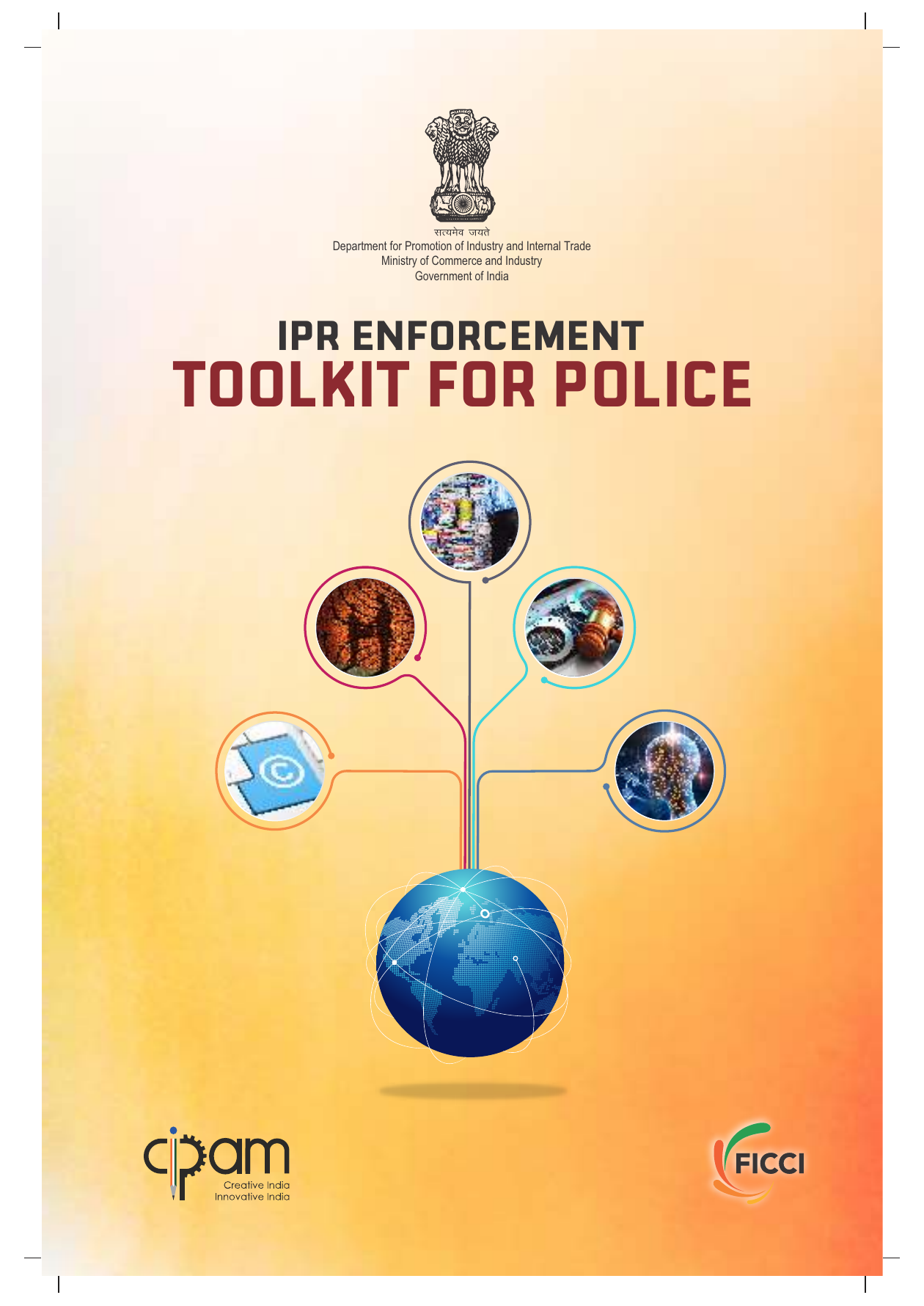
In a collaborative effort with the Federation of Indian Chambers of Commerce and Industry (FICCI), CIPAM has developed a comprehensive IPR Enforcement Toolkit designed specifically for police officials across India.

This toolkit serves as a practical reference guide to assist law enforcement in effectively handling IP-related crimes, particularly trademark counterfeiting and copyright piracy, which pose significant challenges for rights holders both in India and worldwide.

Key components of the toolkit include:

  • An overview of legal provisions applicable to IPR violations
  • A checklist for filing complaints
  • A checklist for conducting search and seizure operations
  • Suggested guidelines for handling IP crime investigations

The toolkit has been widely disseminated to all State Police Departments and major industry associations, equipping enforcement officers with the necessary tools to take swift and informed action against IP infringements.

Capacity Building Campaign

Enforcement agencies such as the judiciary, police, and customs play a vital role in the effective enforcement of Intellectual Property Rights (IPRs). Raising awareness and providing regular training to these stakeholders not only strengthens the overall enforcement ecosystem but also empowers them to handle IPR cases more efficiently in their routine operations.

To support this effort, CIPAM has launched a capacity-building initiative aimed at enforcement agencies through the organization of specialized training programs across the country. These programs are designed to enhance knowledge, improve coordination, and ensure more effective action against IP violations.

Police

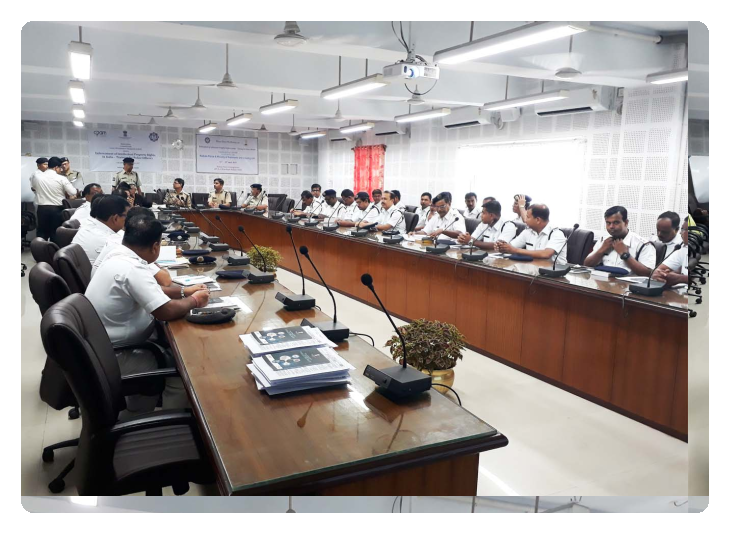
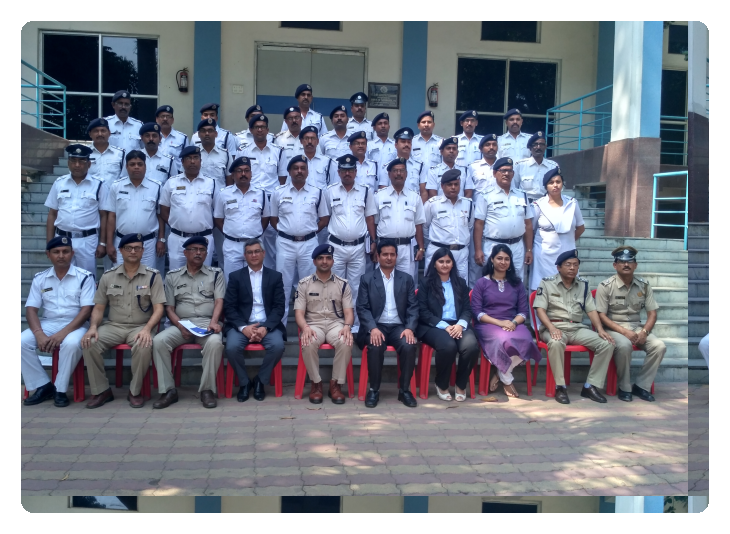
  • The training programmes for Police Officials are aimed at sensitizing the Police about their role, powers and duties in effective Enforcement of Intellectual Property Rights. CIPAM has written to all State Police departments seeking their coordination in organising these training programs
  • Training programmes are designed:
    • To give an overview and introduce IPRs
    • To ensure that the police officials get a diversified insight on topics related to IPR
    • To incorporate wide range of topics
    • Expert Speakers from concerned industries, law firms and academia are invited to make presentations on the topics included in the training program. These experts are well versed with IPRs and its issues.
  • To ensure complete participation of police officials various interactive activities like quizzes, skit, IP videos, etc. are also made part of the training programme be
  • CIPAM has also written to all states requesting them to direct the state police training academies to include IPR as a course in their trainings.
  • During one of the training programs, trainees were asked to perform a skit demonstrating the “Role of Police in Effective Enforcement of IPRs”. The skit showcased the police conducting a successful search and seizure of fake shoes of a famous brand which were being sold by a local merchant. One of the trainees, had the opportunity to replicate the skit in reality during the course of his duty. He actually conducted a raid on shops selling fake shoes and successfully seized fake shoes worth INR 3 million and arrested 3 persons. The raid conducted by this trainee was a real-life replication of the skit enacted by the trainees during training.
Resource Material View / Download
POLICE TOOLKIT Book 2025.pdf Download (5.24 MB)
💬